Like Other Artist of the Time Van Gogh Was Influenced by Art Coming to Europe From
How Japanese Fine art Influenced Vincent Van Gogh
Japonism in the 19th Century Europe
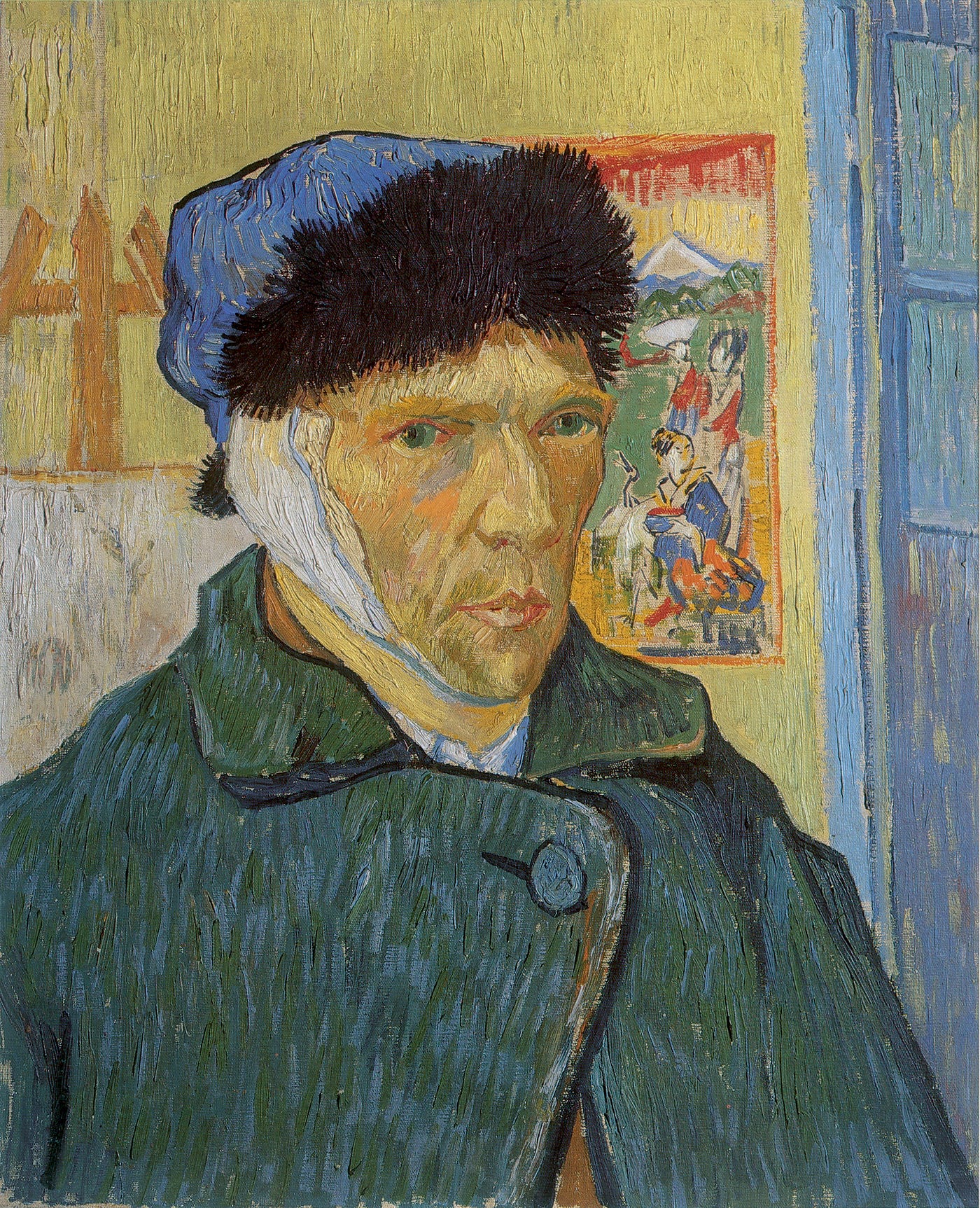
 If you are a fan of Vincent Van Gogh, you may take noticed foreign elements that exist in his paintings. Subconscious in corners of his paintings are certain "oriental" elements that seem out of place with what the audience would look from a 19th-century European painter's painting. In his nearly famous painting Cocky-Portrait with Bandaged Ear, Van Gogh placed a painting of Japanese women in the background. It is rather strange to someone not familiar with art history that a Dutch Painter in the 19th century had elements of Japanese art in his own art.
Nonetheless, this is not simply a strange coincidence or a practical joke. What if I told you that Vincent Van Gogh was heavily influenced by Japanese art? The Japanese fine art manner of Ukiyo-e was undoubtedly one of the virtually influential art styles of the 19th century in Europe.
Ukiyo-east
To sympathize the influence of Japanese art on Europe's art scene, one must beginning empathize the art style of Ukiyo-e. Ukiyo-e translates to "pictures of the floating earth". Ukiyo-e was an art style that became a prominent and pop art style in the Edo era. The Edo era is an era of Japanese history from the early 17th to late 19th century when Japan was united under the Tokugawa Shogunate in Edo (present-day Tokyo) after more than a century of civil wars. Under a unified Japanese government, the state saw an incredible level of prosperity, with a quickly growing merchant course slowly transitioning the nation from a feudal warring land to a backer merchant state. Merchants clustered great wealth in large metropolitan cities similar Edo and Osaka, slowly gaining societal influence over the traditional Samurai class. Ukiyo-east was a genre of art that was born out of this social modify, from a feudal Nihon to a proto-backer merchant Nippon.
As Japan'south metropolis centers gained more population, the Ukiyo-e art style likewise flourished in city centers. Ukiyo-east depicted people and the lifestyle of the urban center, such equally Kabuki women, sumo wrestlers, beautiful scenery, landscapes, historical tales, and pornographic images. Ukiyo-eastward was mass-produced as the images were drawn on wood blocks and printed on paper. This made the paintings highly accessible to the mass, as each painting price no more a bowl of soba noodles. Of class, some Ukiyo-e paintings were made in limited quantity and were sold generally to wealthy merchants and nobles.

This era saw the emergence of prominent and influential Ukiyo-e artists similar Katsushika Hokusai, Ando Hiroshige, Kitagawa Utamaro, and Katsukawa Shunsho. Ukiyo-e paintings are known for their vibrant colors, bold and strong lines, distinctive compositions, and the lack of shadows. This style of painting was also the outset in East Asia to depict people'south facial expressions.
Influence on Europe
Ukiyo-east paintings were first introduced to Europe in the early on to mid 19th century. As Europe began its trade with Nihon after Japan opened its ports to Europe, many Japanese products flowed into Europe and vice versa. Ukiyo-eastward paintings were cheaply available to the public and many of these paintings were used as wraps for Japanese cathay and other delicate exports to Europe, the same way people apply newspapers to wrap certain fragile items today. The introduction of Ukiyo-e to Europe brought a moving ridge of shock and delight to the art scene of Europe. The style of painting like Ukoyo-due east was never seen before in Europe and many painters began to adopt this way of bold colors and lines in their paintings as well. Post-impressionist painters similar Vincent Van Gogh were particularly mesmerized past Ukiyo-eastward paintings.
Van Gogh was known to be an avid fan of the manner, as he himself incorporated elements of Ukiyo-eastward into his paintings and fifty-fifty fabricated parodies and remakes of famous Ukiyo-e paintings. I of the most famous examples of this is Van Gogh's spin on Ando Hiroshige's Sudden Shower over Shin-Ōhashi bridge and Atake. While the original is a woodblock impress painting, Van Gogh's version is an oil painting with stronger colors mixed with his own post-impressionist style.

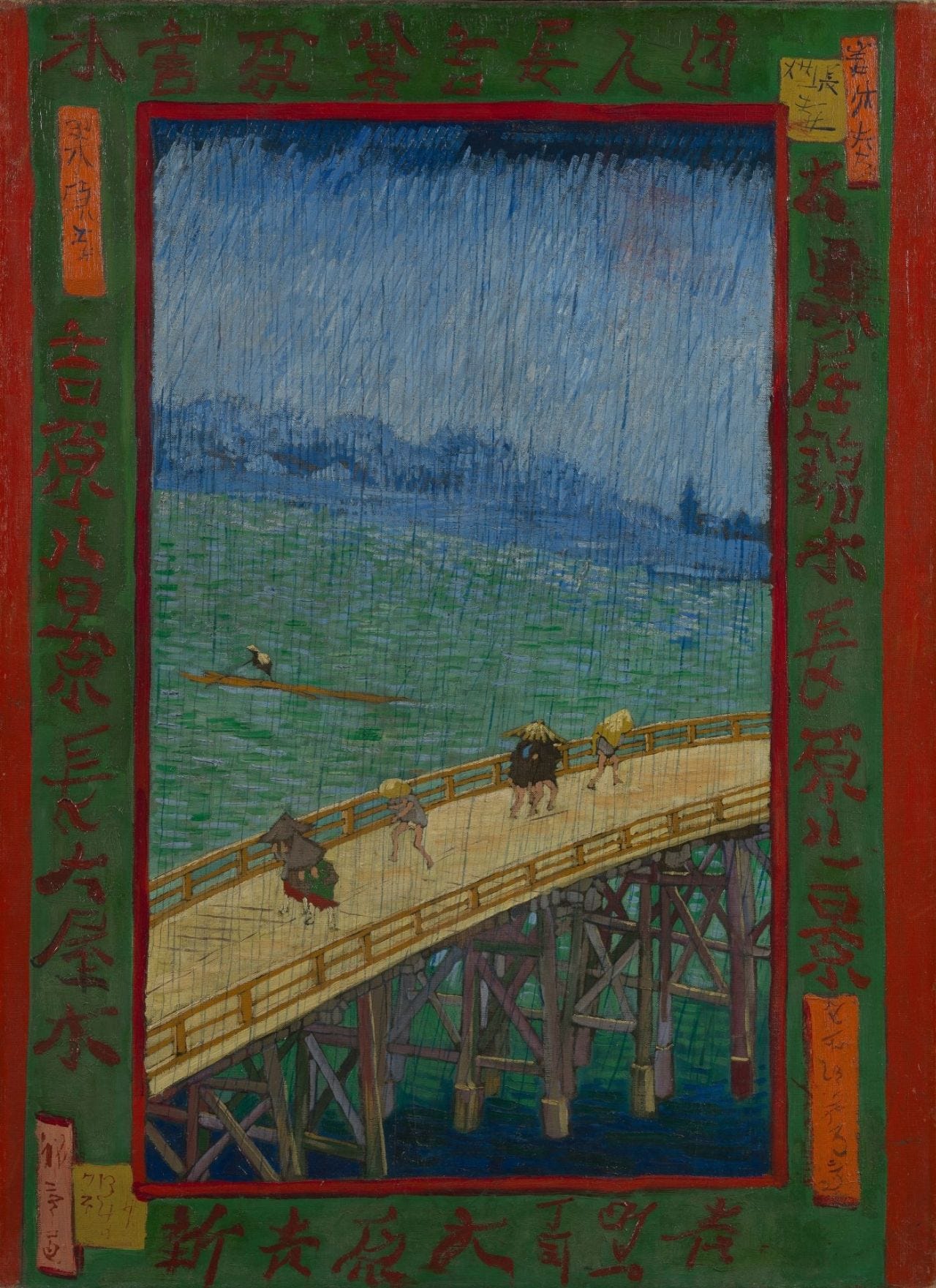
Ukiyo-e paintings became the darling of European painters and art historians since then, becoming one of the nearly dear and studied art styles in Europe. Currently, there are over 200,000 Ukiyo-east paintings stored or displayed in over 20 major museums in Europe. Ukiyo-e influenced most prominent 19th-century European artists like Van Gogh, Edouard Manet, Edgar Degas, and Paul Gauguin.
The phenomenon of European painters deeply admiring Japanese paintings was named "Japonism". Many painters of this era created their own spins and parodies of famous Ukiyo-e paintings and applied the same manner in their own creations. Japonism in Europe was arguably the kickoff example of Nihon'south cultural influence on the global stage. Today's Japan is known every bit a cultural powerhouse, having an immense amount of impact worldwide in areas of animation and gaming, likewise equally nutrient and linguistic communication. Almost 200 years before the current era of Japanese cultural dominance worldwide, Ukiyo-eastward and its say-so over the European art scene was the pioneer for the Japanese civilization's emergence on the global stage.
Source: https://historyofyesterday.com/how-japanese-art-influenced-vincent-van-gogh-996ec2e6afee
0 Response to "Like Other Artist of the Time Van Gogh Was Influenced by Art Coming to Europe From"
Post a Comment